22/10/2026 07:57
Filmed at a Venue or Collected at the Shop? YouTube Location Tags for Cambodian Backdrop-Rental Shops
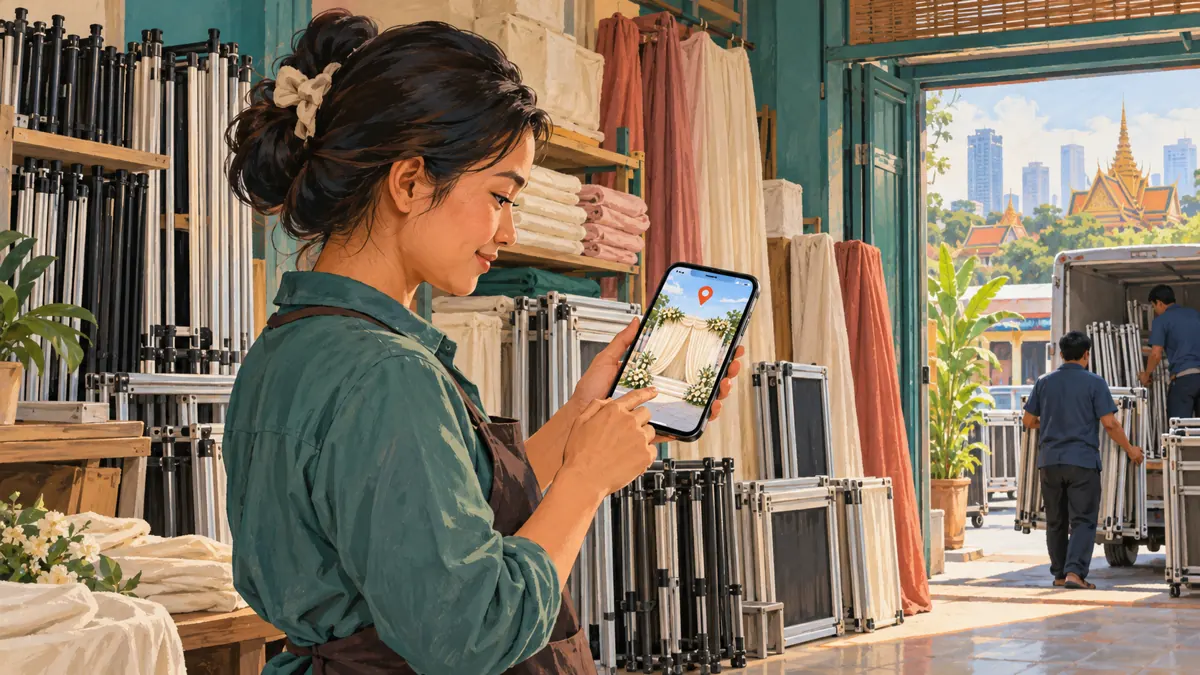
A backdrop demonstration can show the right fabric, frame and arrangement while still sending customers to the wrong place. When a Cambodian rental shop films at an event venue, viewers may mistake that venue for its showroom or collection point. A location tag can add context, but it cannot explain the whole rental arrangement. Before promoting the video, separate where the footage was recorded, where customers collect equipment and where installation is available. This workflow helps a small team make those distinctions clear, check the public result and evaluate an SMM service listing without treating engagement counts as local rental demand.
1. Start with the journey a customer might make
Consider a hypothetical Phnom Penh backdrop-rental shop that records a cream fabric display at a hired courtyard. Its frames are stored elsewhere, and customers must arrange collection from the workshop. The courtyard appears prominently in the video, so a viewer could reasonably assume that visiting it is the next step. That misunderstanding begins with the content, before anyone asks about availability or transport.
Write the intended next action before changing settings: send the event date, approximate backdrop dimensions and installation area to the shop. If collection is possible, explain that its location will be confirmed separately. This gives the video a useful purpose beyond showing attractive equipment. Ask a colleague what they would do after watching the opening and reading the first description lines. If their answer is to visit the filming venue, the practical message needs revision.
2. Separate filming location, collection point and service area
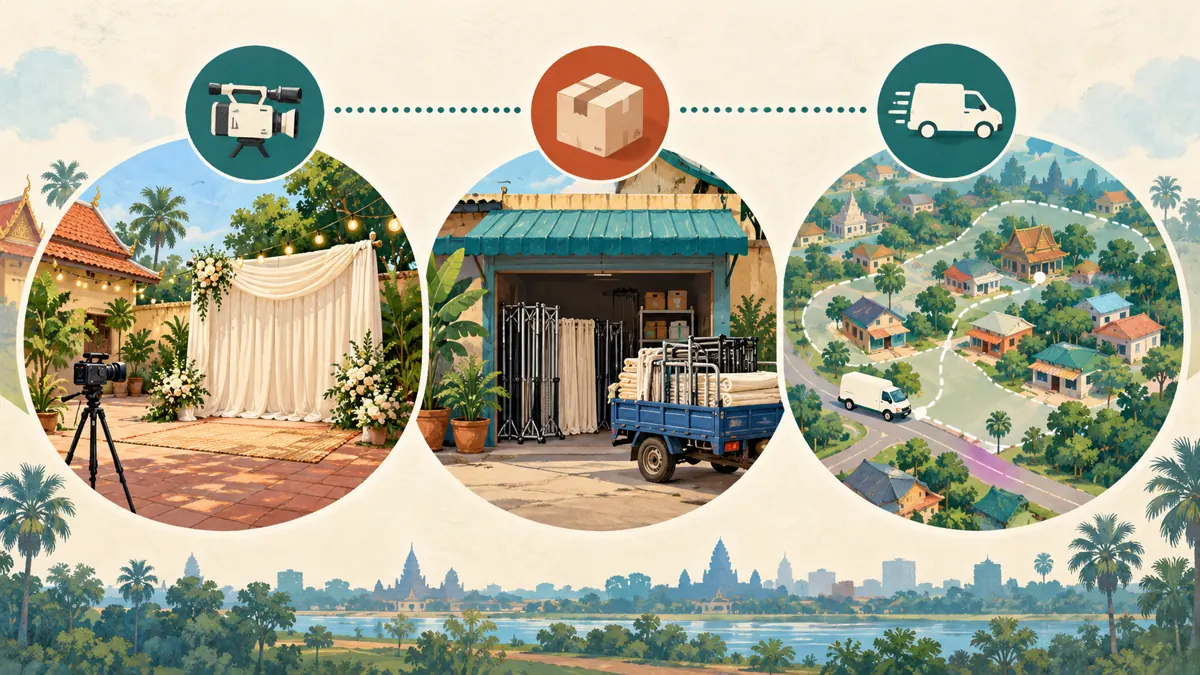
Create three short entries in the working brief. Filming location identifies where the recorded demonstration happened. Collection point identifies where an approved rental can be handed over. Service area describes where the business will consider delivery or installation. These entries may share an address, but they should never be assumed to mean the same thing. A successful installation in one province also does not establish a standing delivery promise there.
YouTube says location tags help viewers find content associated with a place, and clicking a tag can lead to public videos from that location. This makes the tag useful context, rather than a complete set of collection instructions. [YouTube location-tag guidance](https://support.google.com/youtube/answer/7638112?hl=en&co=GENIE.Platform%3DDesktop).
For the hypothetical shop, the brief could identify an approved event venue as the filming place, the workshop as the collection point, and delivery as subject to a separate quote. Keep those meanings consistent wherever the video is shared.
3. Decide whether identifying the place helps
An exact venue reference is useful when the setting explains the demonstration and the business has permission to identify it. For example, doorway access or the arrangement of a public event space may help viewers understand the setup. However, naming a private home rarely helps someone compare fabric colours or folded frame sizes. Leaving location information out can be the clearest editorial choice when it adds exposure without practical value.
Check what was approved before using footage from a customer's event. Permission to show the backdrop should not be casually interpreted as permission to identify a home, guests or a private gathering. Inspect gates, signs, invitations and spoken directions as well as the proposed tag. If the location is uncertain, ask the person who recorded the footage. Do not choose a nearby famous venue merely because its name is recognisable or appears in search suggestions.
4. Set the location on the correct YouTube upload
On a computer, open YouTube Studio and select Content. Choose the relevant Videos, Shorts or Live tab, then open the item's title or thumbnail. In the details, select Show more and find Recording date and location. Search under Video location, select the appropriate result and save. These are the steps described in [YouTube's official instructions](https://support.google.com/youtube/answer/7638112?hl=en&co=GENIE.Platform%3DDesktop).
Before saving, compare the selected upload with the working brief. Similar thumbnails can hide different shoots: a workshop assembly demonstration, an installed backdrop and a dismantling tutorial may all show the same fabric. Use the actual video link and opening frames to identify the intended item. Read the location result carefully instead of selecting the first familiar name. Then record the decision in ordinary language, such as filming venue approved for identification, so another editor understands why that place was selected.
5. Explain collection without making the viewer guess
The description should answer the practical question raised by the scene. For the hypothetical courtyard demonstration, suitable wording would be: This setup was filmed at an event venue. Rental collection is arranged separately with our workshop. Send your event date, required width and installation area before travelling. Adapt this wording to the actual business arrangement; do not imply that collection or installation is available when it has not been confirmed.
For Cambodian readers, use place names and address wording that the intended customers can recognise. If the business communicates in Khmer and English, have a fluent reviewer check that both versions distinguish filming from pickup. Keep the business name, district and any approved directions consistent. Avoid relying on a decorative landmark in the footage as the only navigation clue. A viewer should understand the next step even if they do not recognise the neighbourhood or open the location tag.
6. Review the video as a first-time visitor
After saving, open the public video through the link you intend to share. Check it on a phone because the placement and amount of visible information may differ from the editing screen. Read the displayed location and the opening description, then watch the section showing the venue entrance. Look for contradictions between these elements. A correct description can still be undermined by narration inviting people to visit an old address.
Give a colleague three questions without explaining the desired answers: Where was this filmed? Where would you collect a rental? What must you confirm before travelling? Their response is a comprehension check, not audience research. If they confuse the places, revise the strongest misleading element first. That might mean changing the opening wording or selecting a different shot. Recheck the same public link after the correction, and note which version was approved for sharing.
7. Keep an SMM listing separate from the location decision
The supplied catalogue includes the exact listing “Youtube - Views ~ MIXED AFRICAN ~ Max 500K ~ 𝐍𝐎 𝗥𝗘𝗙𝗜𝗟𝗟 ~ Start 0-6hrs”. Its category identifies it as a YouTube views offering, but the supplied description is empty. The title's geographic wording, quantity and timing are catalogue claims, not independently verified evidence. They do not establish Cambodian viewers, rental enquiries, platform approval or suitability for this business.
A location tag cannot turn purchased engagement into local targeting. YouTube prohibits artificial increases in engagement and warns that a hired promoter's methods can affect the channel. Review the method before making a purchasing decision; decline services that artificially inflate metrics. [YouTube fake engagement policy](https://support.google.com/youtube/answer/3399767?hl=en).
For a panel review, record the listing identifier, the unanswered questions and the decision. If the method remains unclear, leave the purchase unapproved. The video can still support honest promotion through existing customer conversations and relevant business channels.

8. Promote the useful demonstration with a specific message
Once the location information is clear, share the demonstration where it answers a real question. A customer asking whether a backdrop fits an indoor space needs the dimensions and setup explanation, followed by the conditions for delivery or collection. A venue coordinator may need to understand access requirements. These are different conversations, so give the same video a short introduction suited to the recipient's question.
In a hypothetical enquiry, the customer supplies an event date and a room photograph but no measurements. The shop can share the demonstration and ask for usable wall width, ceiling clearance and the proposed installation area. The video then supports a concrete decision. Do not describe the filmed venue as a partner unless that relationship exists and can be stated accurately. Similarly, avoid suggesting that a previous display proves present availability, inclusion of flowers or suitability for every room.
9. Measure whether the location explanation works
Keep a small enquiry log focused on confusion that staff can observe. Note whether someone asked for the filming venue's address, understood that collection required confirmation, or supplied the installation area when requesting a quote. Use brief operational notes rather than copying private conversations into a widely shared document. These observations can reveal wording problems even when the video receives little traffic.
Separate business outcomes from platform counters and any third-party delivery records. A view does not establish that someone is Cambodian, understood the location or intends to rent. Purchased engagement is not evidence of genuine interest, sales or advertising delivery. If enquiries become clearer after an edit, describe that as an observation rather than proof that the tag caused the change. Other factors, including staff replies, seasonality and the audience receiving the link, may have changed as well.
10. Avoid fixes that introduce a new misunderstanding
Do not tag the workshop merely because it is the address you want customers to remember when the footage was recorded elsewhere. Explain collection in the customer-facing wording. Do not add several place names to the title hoping to imply coverage across Cambodia. State the actual filming context and ask for the intended installation area. Precision makes the content easier for staff to use when answering enquiries.
When the shop moves, review collection instructions in previously shared demonstrations. The original filming location may remain historically accurate even though pickup details have changed. Preserve that distinction instead of rewriting the entire video's history. Assign one person to maintain the current collection wording and another to check the public result. Before sharing an older demonstration again, confirm that its equipment, rental conditions and contact route still make sense for the enquiry at hand.
Frequently asked questions
Should every backdrop demonstration have a location tag?
No. Decide whether the place helps explain the demonstration and whether identifying it is appropriate. A close-up showing how fabric attaches to a frame may need no location context. Keep collection and delivery instructions clear regardless of the tagging decision.
Can I use the shop address when the video was filmed at a customer's venue?
Use the location field consistently with the filming context. Put the collection address or arrangement in clearly labelled customer instructions instead. Substituting the shop for the filming venue can make the video harder to interpret, particularly when its visible surroundings tell a different story.
What if the venue name appears differently in Khmer and English?
Confirm the intended place with the venue contact or the person who filmed it. Use approved spelling in the accompanying explanation and check the selected result carefully. If you cannot confidently identify the correct place, leave the tag unset while resolving the uncertainty.
Will a Cambodian location tag make an SMM views service reach Cambodian customers?
Do not infer that. A filming tag does not verify a third-party provider's audience or delivery method. The supplied listing has no descriptive evidence establishing Cambodian reach. Evaluate promotion methods independently, follow platform policy and judge rental demand through genuine enquiries and confirmed business activity.
What should we change if people keep asking to collect at the venue?
Review the opening scene, spoken invitation and first description lines together. State that the venue is the filming location and collection requires separate confirmation. Ask someone unfamiliar with the video to repeat the intended next step. If confusion remains, use a clearer opening shot or explanation before sharing again.
Explore the current service catalogue, create an account, or ask a specific question through support tickets.
Prepared with AI assistance. Illustrations explain the workflow and do not represent customer results.