19/10/2026 22:53
Can Beginners Play Along? A TikTok Duet Workflow for Cambodian Music Shops

A music-shop demonstration can sound impressive while leaving beginners unsure how to join in. A short rhythm exercise gives them something concrete to try before asking about lessons. For a Cambodian shop promoting beginner tuition, the useful question is whether someone can follow the instructor comfortably and understand the next step. TikTok Duet offers a format for that experiment. This workflow explains how to prepare the exercise, review permissions, test participation and handle enquiries. It also helps SMM-panel customers recognise why a purchased follower count cannot establish that a teaching idea works.
1. Choose a teaching problem that suits playing together
Start with one difficulty a beginner can recognise: keeping a steady pulse, entering after a count-in or repeating a short clap pattern. Avoid combining rhythm, chord changes and instrument shopping in the same invitation. A participant should understand the task without owning the product the shop wants to sell. Hand clapping is a practical starting point because the action is visible and requires no specialist equipment.
Consider a hypothetical Phnom Penh guitar shop offering introductory lessons for adults. Its instructor wants prospective learners to experience the pace of the teaching before visiting. The proposed exercise is a short, original clap pattern with a clear preparation cue. The business objective is a relevant conversation about tuition. Neither a public performance nor an instrument purchase is required to take part.
2. Decide whether Duet adds something useful
TikTok describes Duet as a split-screen format in which an original video and another creator’s recording play simultaneously. The resulting Duet appears on the participant’s profile, with interaction governed by that participant’s privacy settings. This makes it suitable for an exercise where seeing the instructor alongside the learner helps explain timing. See TikTok’s Duets documentation in the sources.
Ask what the second recording contributes. For a rhythm exercise, it can show where someone starts and whether the preparation cue is understandable. For a detailed explanation of guitar maintenance, another person appearing alongside the instructor may add little. Use an ordinary demonstration when the viewer mainly needs to watch. Choose Duet when doing the activity together is central to the lesson.
Participation should remain optional. Some prospective learners will practise privately because they dislike recording themselves. Give them an equally clear route to ask about classes. A campaign that treats public participation as the only sign of interest can overlook people who are ready to learn but uncomfortable performing online.
3. Build a rhythm script with a visible entry point
Write the exercise as preparation, demonstration and repetition. First, explain what the viewer will do. Then show the pattern once at a comfortable pace. Finally, repeat it with an obvious cue to join. Keep the instructor’s hands inside the frame throughout. Avoid cutting between camera angles during the moment when the learner needs to match the movement.
For the hypothetical shop, the instructor might say that viewers can listen once, then clap along with the repeated pattern. Record the spoken guidance in the language the intended learners understand, such as Khmer for a Khmer-speaking class. Use brief supporting captions where helpful. Keep the invitation and lesson description consistent about the teaching language.
Use an original exercise and audio the business has the right to publish. Turn off unrelated shop music while recording. A familiar song can distract from the timing task and introduces a separate permissions question. The exercise should still make sense without a fashionable soundtrack, elaborate transition or recognisable commercial recording.
4. Review reuse permissions before inviting participation
TikTok’s documented route is Profile, Menu, Settings and privacy, Privacy, then Reuse of content. Under Allow reuse of content from, the choices include Everyone or Friends, meaning followers you follow back. Allowing others to Duet requires a public account. For an individual video, review Allow reuse of content in its posting options or privacy settings. TikTok notes that disabling this also affects Stitch, stickers and adding the post to Stories. Consult the Duet privacy settings source.
Make the choice deliberately with the instructor. A teaching demonstration created for public participation differs from footage containing a private student, a customer conversation or an unfinished commercial collaboration. Remove unrelated people and identifying paperwork from the scene. Record the approved purpose of the clip so another staff member understands why reuse was enabled.
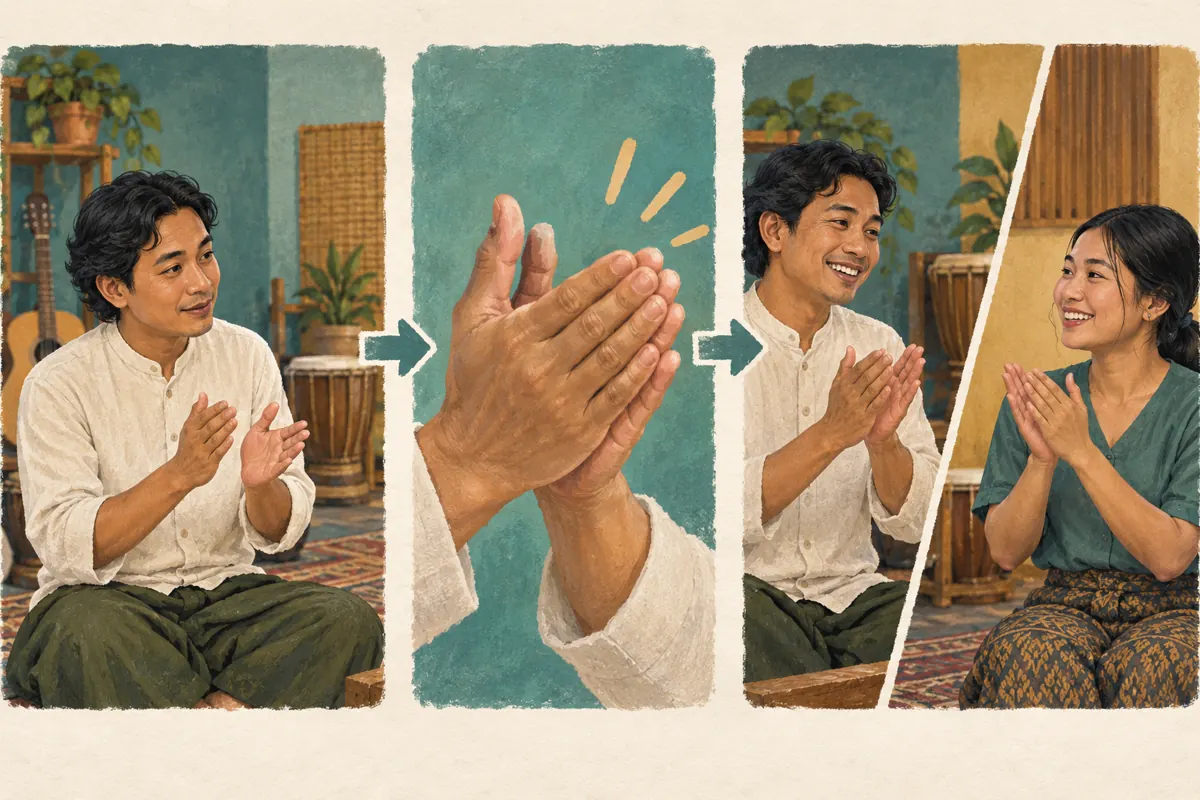
5. Test the actual recording experience with a colleague
Ask a willing adult colleague to open the posted exercise, tap Share and choose Duet. TikTok’s creation flow then allows recording, editing and saving a draft or posting. Not every video offers Duet. Use the documented flow as a starting point and check the controls actually available in the app. The colleague can inspect a draft without publishing a test response.
Watch the combined recording together. Can both sets of hands be seen? Does the preparation cue arrive early enough? Can the learner hear the reference rhythm clearly? Listen to the finished recording rather than assuming the audio heard during preparation matches the result. Simplify the exercise if the learner needs a separate explanation before every attempt.
Ask the colleague to describe the task in their own words. If they believe they should copy after the instructor stops, but the intention is simultaneous clapping, rewrite the invitation. This test checks instruction quality, not musical talent. Repeat it after a meaningful change to the cue or framing, rather than endlessly polishing decorative details.
6. Connect the exercise to a specific local enquiry
Give interested viewers one manageable next step. In the hypothetical example, the caption could invite questions about beginner guitar lessons at the shop’s stated Phnom Penh location. Include confirmed practical information, such as whether instruments are available during lessons and how to ask about the timetable. Avoid promising availability before staff have checked it.
Prepare a helpful first response: ask which instrument the person wants to learn, whether they are starting from the beginning and which general lesson times suit them. Explain the available options using current information. A public comment is not the right place to request a home address, payment evidence or other unnecessary personal details.
Make the exercise useful even to someone who never contacts the shop. A clear learning experience gives the promotion substance. If every instruction interrupts the activity with a sales message, viewers may struggle to understand what they are practising. Put the commercial next step after the teaching task has been explained.

7. Evaluate SMM-panel listings against the actual objective
The supplied kdmv-smm.com catalogue includes the exact public title “TikTok Followers ~ Bot Profiles ~ Max 500k ~ 100k/days ~ Instant ~ 𝐍𝐎 𝗥𝗘𝗙𝗜𝗟𝗟”. It is presented as a follower listing and explicitly uses the words Bot Profiles. Its description field is empty, so the title provides no independent verification of delivery claims, audience location or suitability for a Cambodian lesson campaign.
That listing does not establish that anyone will practise the rhythm, understand Khmer instruction or ask about a class. Purchased engagement is not evidence of genuine interest, sales, ad delivery or Cambodian users. Keep those distinctions explicit when discussing a promotion budget. A larger number beside a profile cannot answer whether the instructor’s cue is understandable.
TikTok’s Integrity and Authenticity guidelines prohibit services that artificially increase engagement and describe enforcement against inauthentic signals. For this workflow, exclude artificial follower purchases from the plan. Spend the available effort on a clearer demonstration, voluntary participation and prompt answers to relevant enquiries. Reviewing a catalogue can reasonably end with a decision that none of the listed services meets the objective.
8. Review learning signals separately from business outcomes
Keep a small review note with three categories: teaching questions, voluntary participation and lesson enquiries. A teaching question might reveal that the entry cue is unclear. A voluntary response might show that someone enjoyed the activity. A lesson enquiry asks about tuition details. These observations can inform different decisions, and none should automatically be counted as an enrolment.
Record the substance of an enquiry without collecting unnecessary personal information. For example, a hypothetical note might say that someone asked whether complete beginners could attend an evening class. That suggests a useful follow-up explanation about level and scheduling. It does not establish a booking until the business and learner have actually confirmed one.
Use a review period that matches staff capacity, then choose one improvement. If people misunderstand the exercise, revise the instruction. If questions repeatedly concern location, clarify the visit information. If there are no responses, avoid inventing a cause: the topic, distribution, timing and audience fit may all remain uncertain.
9. Correct mistakes without turning learners into advertising proof
Common mistakes include starting the rhythm immediately, framing the instructor’s face while cropping the hands, changing tempo unexpectedly and adding speech over the moment participants need to hear. Another mistake is making a beginner invitation sound like a public audition. Keep the tone supportive and explain that imperfect attempts are part of practice.
Do not describe a staff demonstration as a spontaneous customer response. If a colleague appears in a published example, identify the teaching context honestly. Ask before featuring someone’s attempt in another promotional asset. A person choosing to participate in an exercise should not be treated as providing a testimonial about lessons they have never attended.
Assign someone to review questions and notice misleading interpretations. If a response suggests the clip promises a free class, correct the offer wording promptly. If someone asks for detailed personal coaching, explain what help the shop can realistically provide. Clear boundaries prevent a simple promotion from creating expectations the team cannot fulfil.

Frequently asked questions
Should we ask participants to buy a guitar first?
A clap exercise works without an instrument, which makes the first step accessible. Explain equipment requirements separately when someone asks about lessons. If the shop provides instruments during tuition, say so only after confirming that arrangement. Participation should not imply a purchase commitment.
What if the colleague cannot find Duet?
Review the original post’s reuse permission and the account’s eligibility using TikTok’s official help. Do not instruct someone to bypass restrictions or change their age information. If the feature remains unavailable, provide an ordinary practice video and a straightforward enquiry route instead.
Can we remove every associated Duet without affecting our original?
Be careful with the bulk removal control. TikTok states that Remove all posts in reuse history permanently removes the original and associated Duet and Stitch videos. Read the confirmation before acting and preserve any original you need. This is different from planning permissions for future participation.
Does a well-played response prove the person wants lessons?
No. They may already be a musician, enjoy the exercise or be helping a friend. Respond to the activity without assigning commercial intent. A relevant question about tuition is stronger evidence of interest, while a booking requires explicit confirmation. Avoid turning ability, enthusiasm or visible participation into an invented sales result.
What should we change if the exercise attracts questions but no bookings?
Read the questions first. Confusion about timing calls for clearer instruction; uncertainty about location or equipment calls for better practical information. People may also enjoy free practice without wanting tuition. Improve the specific gap you can observe, then review again. Buying followers would not resolve these unanswered questions.
Explore the current service catalogue, create an account, or ask a specific question through support tickets.
- TikTok Help Center: Duets
- TikTok Help Center: Duet privacy settings
- TikTok Community Guidelines: Integrity and Authenticity
Prepared with AI assistance. Illustrations explain the workflow and do not represent customer results.