21/10/2026 08:08
Where Was the Care Advice? YouTube Transcripts for Cambodian Woven-Mat Shops
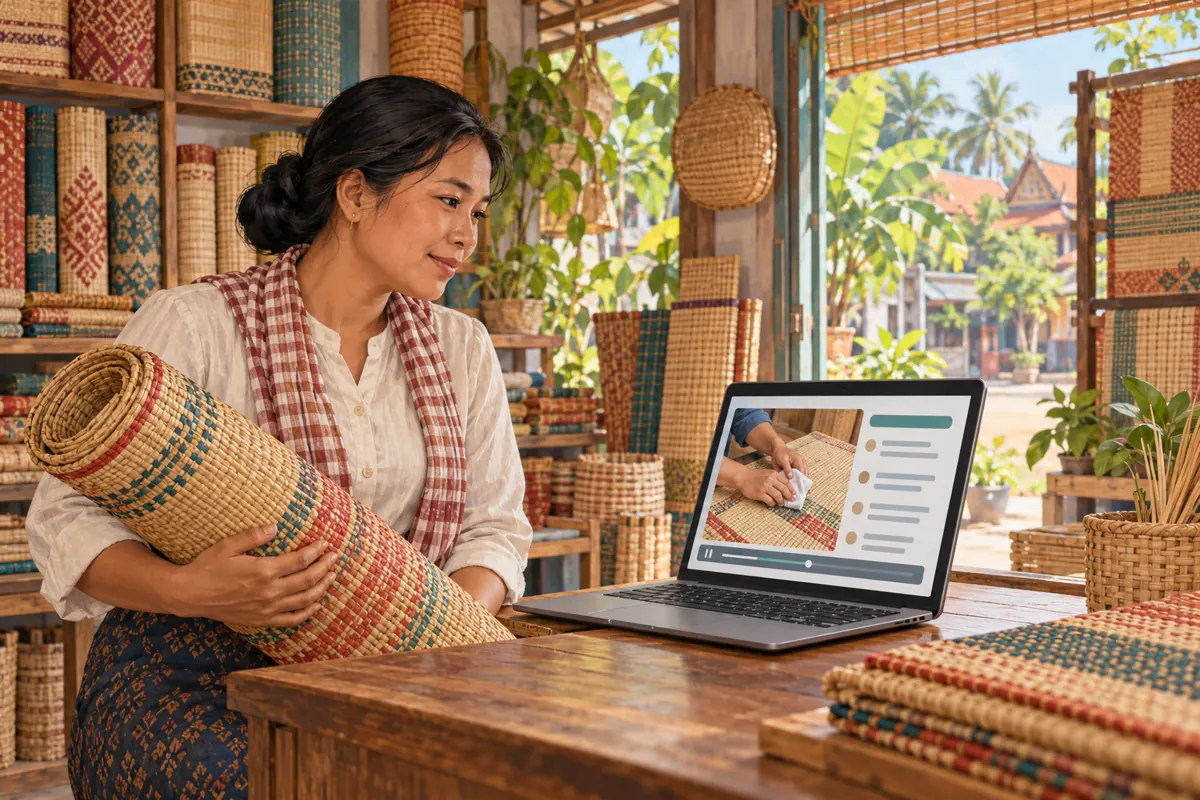
A customer remembers a woven-mat demonstration but cannot find the sentence about cleaning the edging. Sending the same video again leaves the customer with the same problem. For a Cambodian shop promoting several materials and finishes, the useful next step is to help the viewer locate the relevant explanation and check which product it describes. A YouTube transcript can support that task when captions are available. This workflow connects the spoken answer, the visible sample and a clear customer reply before any further promotion. It also gives SMM-panel customers a practical reason to assess content usefulness separately from service delivery.
1. Start with the question the customer needs answered
Consider a hypothetical Phnom Penh shop selling natural reed mats alongside synthetic woven mats. Its demonstration covers unpacking, surface cleaning, edging and storage. A customer asks whether the cleaning step applies to a mat bought earlier. The staff member needs to identify both the relevant passage and the customer's item. A general reply such as “Everything is explained in our video” transfers that work to the buyer.
Write the question in one sentence before opening the video. For example: “Does the demonstrated cleaning method apply to this customer's fabric-edged model?” Then note what is missing: the model reference, a clear edge photo or the supplier's care instructions. This prevents a familiar phrase in the transcript from becoming an answer prematurely. The goal is a supported reply, not simply finding a word that resembles the enquiry.
2. Open the transcript and locate a candidate passage
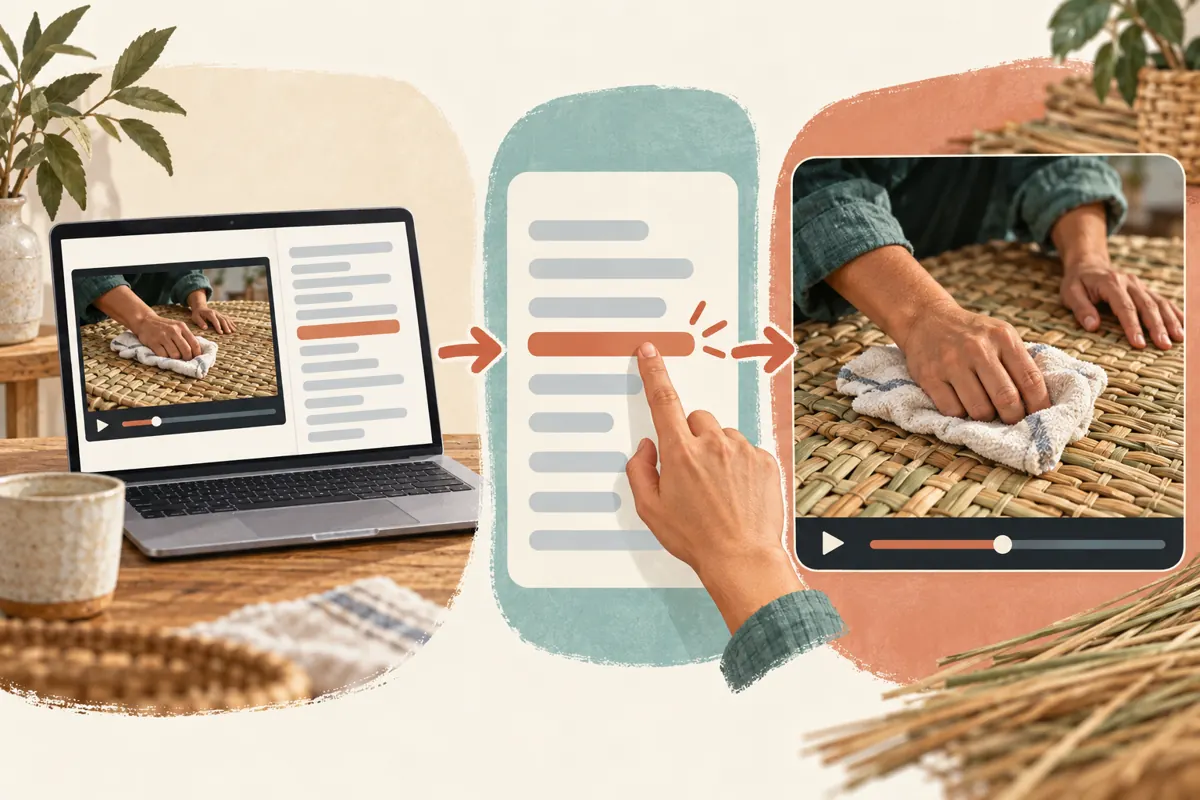
YouTube's official transcript guidance says viewers can see a full transcript for videos with captions. Open the video description and select Show transcript. Selecting a caption line takes the viewer to that part of the video. This provides a route from a readable sentence to the accompanying demonstration. The official instructions are listed in the sources.
Read through the transcript for the relevant action, material or product reference. Treat the first matching passage as a candidate. Play the surrounding explanation and inspect what the presenter is holding. For the hypothetical shop, a line mentioning the edge may belong to the synthetic mat even though the preceding demonstration featured reed. Record the useful playback time in the staff reply notes, together with the product shown. That small addition makes the answer easier for another employee to check.
3. Handle missing captions before advertising transcript access
Check the actual public video before promising customers that they can read its transcript. A finished upload is not enough to establish that the required caption track is available. If staff cannot find a usable transcript, provide a direct written answer or a checked playback time while the content owner reviews the caption setup.
YouTube documents caption creation through YouTube Studio: select Subtitles, choose the video, add the appropriate language and add subtitles. The available workflows include uploading a caption file or entering captions manually. For a Khmer demonstration, have a competent Khmer reader review the wording against the speech and product terminology. Keep genuine model names consistent. The editorial task is to represent what was said accurately; additional advice belongs in a separate explanation rather than being inserted as though the presenter spoke it.
4. Preserve the condition attached to the instruction
The most useful words may come immediately before or after the sentence a customer notices. A demonstration might distinguish one material from another, identify a particular finish or explain a condition under which the instruction applies. Removing that context can turn a limited demonstration into a broad claim.
In a hypothetical review, a staff member finds “wipe the surface” but discovers that the presenter first identifies a specific supplier-approved sample. The reply should retain that limitation. Check the complete spoken thought, the visible item and the relevant product instructions together. If they disagree, stop using that passage as customer guidance until the discrepancy is resolved. These examples illustrate an editorial checking process, not universal mat-care advice. Actual cleaning recommendations should come from verified instructions for the item concerned.
5. Match the demonstration to the customer's mat
Build a short identification note containing the material, edge construction, model reference and any relevant finish. These details help distinguish products that share a colour or pattern. A photograph of the whole mat may show the design clearly while revealing little about its backing or edging.
Ask only for the additional detail needed to resolve the question. In the hypothetical shop, staff might request a close photo of the edge and the product label, with unrelated personal information kept out of the frame. Compare those details with the demonstration and the shop's product record. If identification remains uncertain, say so and offer an in-person check or supplier confirmation. Do not select the closest-looking product merely to give a faster answer. A transcript helps locate information; it does not establish material composition or compatibility.
6. Write a reply that works without a technical tutorial
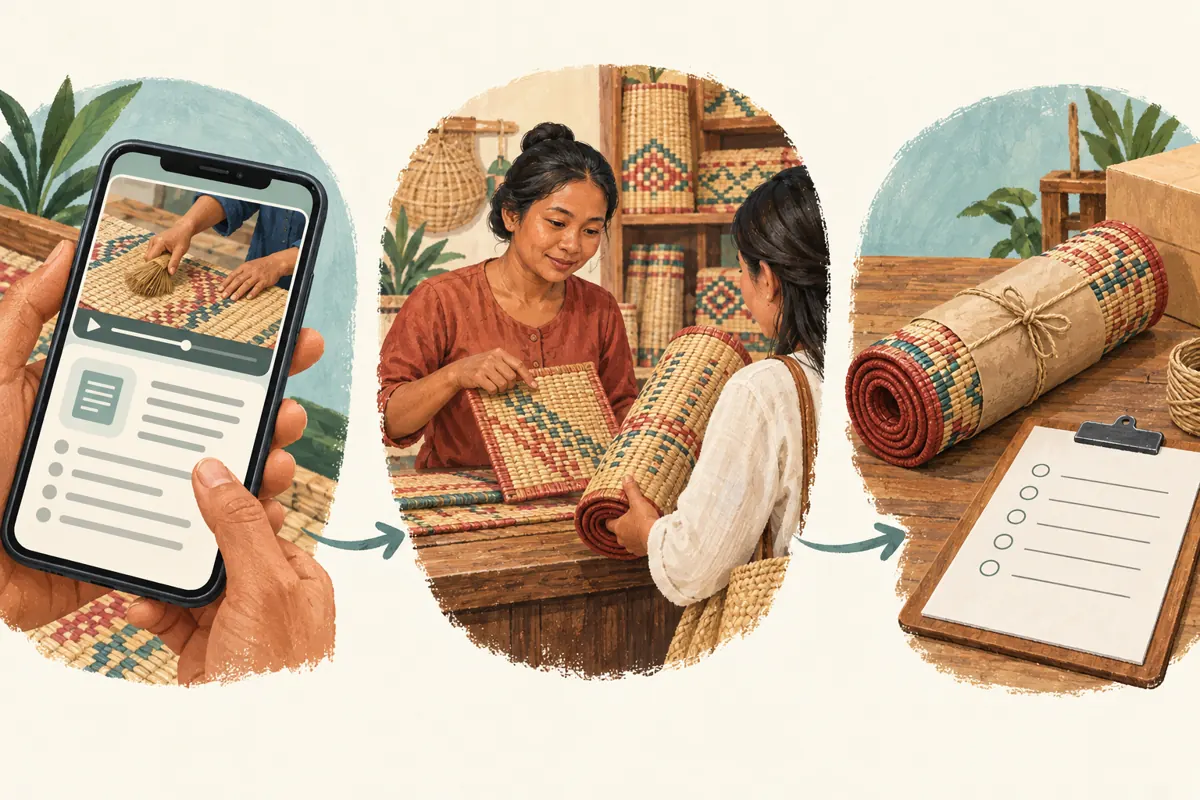
Lead with the useful answer or the missing detail, then provide the video reference. A hypothetical reply could read: “The demonstration covers the reed sample shown on screen. Please send a close photo of your mat's edging so we can check whether it is the same model. You can read the relevant passage through Show transcript in the video description.” This tells the customer what to do next without implying that the model is already confirmed.
When sharing a checked playback time, explain what the viewer should look for there. Avoid sending only a number or a link. Also provide the essential answer in the language the customer understands. Someone asking a straightforward care question should not need to learn a platform feature before receiving help. Keep any purchase invitation secondary until the original question is resolved.
7. Promote the answer with a precise promise
Once the passage and product context are checked, use the customer's question to shape a useful promotional post. For the hypothetical shop, “See how we demonstrate care for this reed-mat model” is more accurate than “The cleaning method for every woven mat.” Show the same product in the promotional image and the linked demonstration.
Prepare a small handoff for whoever shares the post: the public video address, the product reference, the question answered and any limitation that must accompany the link. Ask that person to open the destination on the device they normally use. This is also a good moment to remove stale sales details from the surrounding promotional copy. The care demonstration may remain useful after a particular colour sells out, but viewers still need an accurate route to current availability.

8. Apply a policy check before considering an SMM service
A panel listing does not establish that its method is suitable for YouTube. YouTube's fake engagement policy prohibits artificial increases in views, likes, comments and other metrics. It also explains that a hired promoter's actions can affect the channel. Read the policy before committing to a service; decline activity that would artificially inflate engagement.
One supplied public listing is “Youtube Shorts Likes | Max 50k | 5k-10k/Day | 𝐍𝐎 𝗥𝗘𝗙𝗜𝗟𝗟”. Its title identifies a Shorts-likes offering, but the supplied description is empty. The title does not establish delivery methods, policy compliance or suitability for this demonstration. Its quantities and delivery wording are catalogue claims, not verified performance evidence. It offers no supported basis for expecting transcript improvements, product understanding or Cambodian buyers. For this workflow, accurate captions and useful replies are actionable priorities; buying likes does not resolve the customer's care question.
9. Measure whether the answer helped
Keep a lightweight enquiry log with the question category, product identified, passage used and unresolved issue. Record customer feedback only when it was actually provided. “Customer confirmed the explanation answered the edging question” is different from assuming success because the conversation stopped. Silence can have many explanations.
Review recurring questions for content improvements. If customers repeatedly ask which sample appears in the demonstration, film a clearer product identification shot next time. If they understand the method but cannot identify their own mat, improve the product reference information. Purchased engagement is not evidence of genuine interest, sales, ad delivery or Cambodian users. Any panel transaction record belongs in a separate service history. It should not be counted as proof that a customer found, understood or correctly applied the care explanation.
10. Avoid shortcuts that create confident but weak answers
A common mistake is quoting a transcript line without watching the corresponding action. Another is treating a caption as more authoritative than the actual product instructions. Staff may also reuse a saved reply for a different model because the customer's question sounds familiar. Each shortcut removes a check that matters to the answer.
Use a simple decision process. If the passage exists, the wording is accurate and the product matches, prepare the reply. If the passage is unclear, review the surrounding demonstration. If the product is uncertain, request identification. If the guidance conflicts with verified instructions, pause promotion of that claim and correct the underlying content. Assign one person to approve the final explanation so that staff do not improvise competing versions. Recheck saved replies whenever the demonstration or the relevant product specification changes.
Frequently asked questions
Can a transcript replace watching the mat demonstration?
It can help locate the explanation, but the image may contain essential context: the sample being held, the edge being touched or the part excluded from the demonstration. Watch the relevant passage before giving product-specific advice. If the video never identifies the sample clearly, use the shop's product record or ask the person who filmed it.
What should staff do when the customer cannot find Show transcript?
Give the essential answer directly and provide a checked playback time if useful. Staff should then confirm transcript availability on the actual public video rather than repeatedly telling the customer to search the interface. The customer enquiry can still be handled while the content owner reviews captions.
Should Khmer captions translate every English model name?
Preserve genuine model names and identifiers so customers can compare them with labels or receipts. Translate the surrounding explanation accurately and consistently. Ask a Khmer-speaking reviewer who understands the product to check ambiguous terms. A familiar-looking translated word should not replace a precise identifier that the shop needs for matching.
Does a larger like count show that viewers understood the care advice?
No. A like does not establish comprehension, product ownership or correct use of the instruction. Purchased likes provide no reliable evidence of those outcomes either. Look for specific, voluntarily supplied feedback and unresolved questions. Even positive feedback from one customer should remain an individual observation rather than a claim about all viewers.
Is it worth preparing transcripts for older demonstrations?
Prioritise videos that still describe stocked products or repeatedly answer current customer questions. First verify that their advice remains accurate. A transcript makes outdated wording easier to access too, so adding one should follow a content review. If the underlying demonstration is misleading, correct or replace that explanation before promoting it again.
Explore the current service catalogue, create an account, or ask a specific question through support tickets.
- YouTube Help: View video transcripts
- YouTube Help: Add subtitles and captions
- YouTube Help: Fake engagement policy
Prepared with AI assistance. Illustrations explain the workflow and do not represent customer results.