22/10/2026 05:33
Measure, Assemble or Pack Away? YouTube Playlist Order for Cambodian Market-Stall Equipment Shops
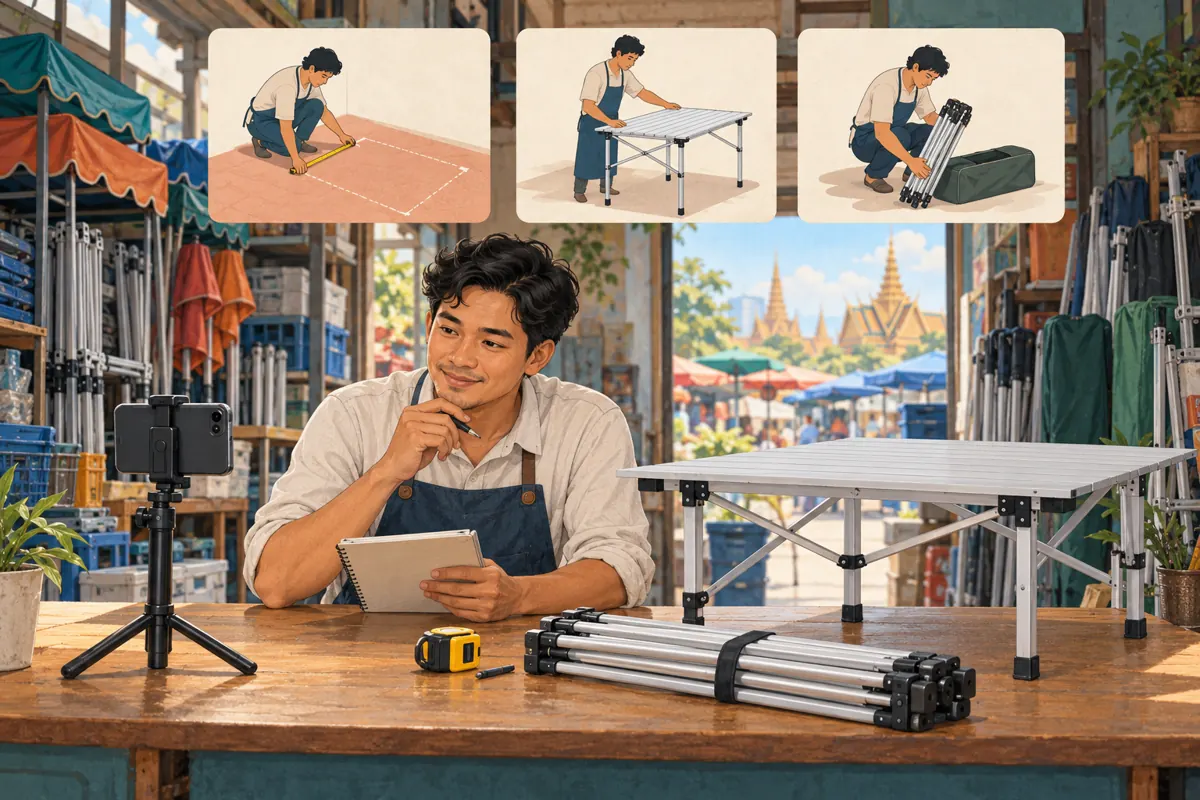
A buyer researching a portable market table may need three different answers: will it fit the available space, how does it open, and how small is it when packed? A shop can have excellent videos answering all three questions while still making the buyer hunt for the right starting point. For Cambodian equipment sellers sharing demonstrations through social posts and customer conversations, a carefully ordered YouTube playlist can make that journey easier. The practical task is to arrange videos around the buyer’s decisions, check that they demonstrate compatible equipment, and test the shared experience before promoting it. This workflow also helps SMM-panel customers recognise when a proposed service has no useful connection to the problem they actually need to solve.
Start with the decision the buyer must make
In a hypothetical example, a Phnom Penh supplier sells portable display tables to market vendors. Its newest upload shows packing a table into a carrying bag, while an older video explains the floor space required. Putting the newest video first would follow the shop’s production history. Putting the measurement guide first would follow a prospective buyer’s decision process.
Write one purpose sentence before opening any playlist controls: help a first-time buyer assess this table, understand its setup and check its storage requirements. That sentence gives you a reason to include each video. A colourful market montage may be attractive, but it does not automatically belong between a measurement explanation and an assembly demonstration. Keep the sequence focused enough that a staff member can explain its purpose without listing every product the shop sells.
Build the sequence on paper before changing YouTube
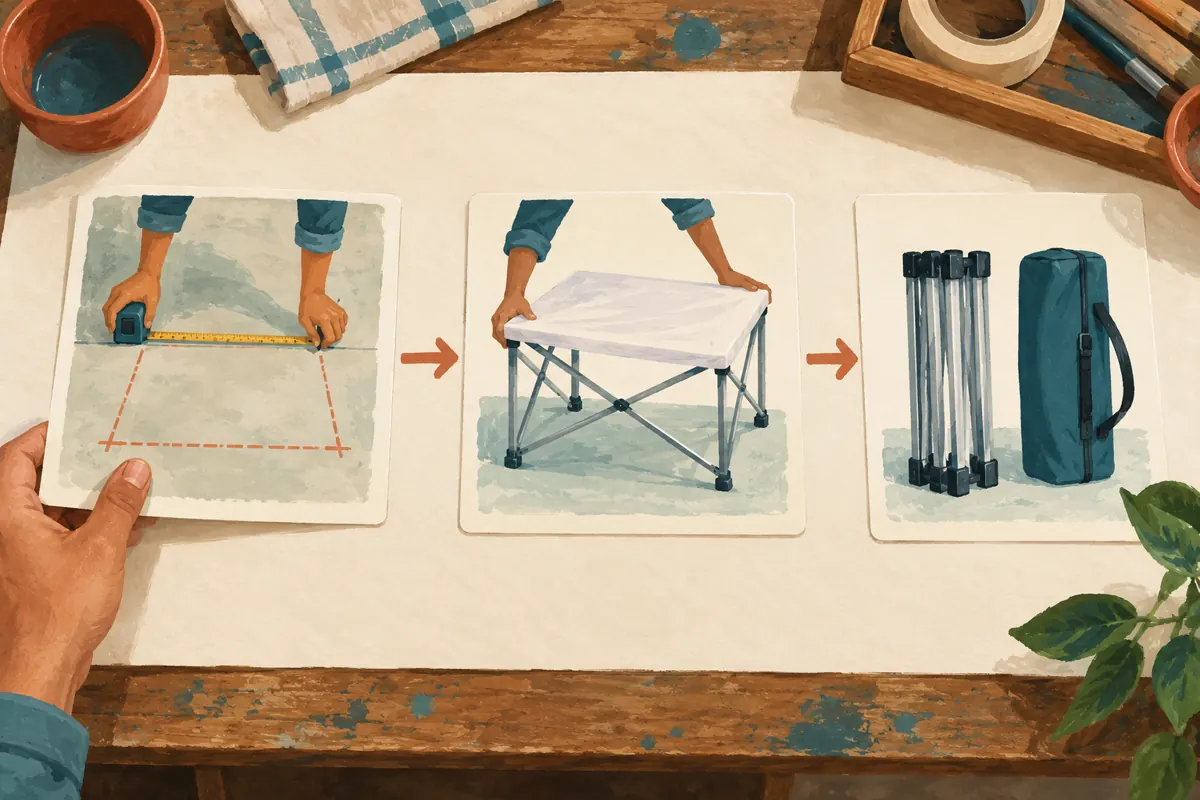
Make a small planning sheet with a row for each proposed video. Record the buyer’s question, the model shown, the answer provided and anything the viewer must already understand. Arrange those rows by dependency. For this hypothetical shop, the natural progression is measuring the available footprint, identifying the supplied parts, opening and securing the table, then folding and storing it.
Choose the shortest sequence that answers the purpose sentence completely. If one existing video covers parts identification and assembly clearly, there is no need to split it just to create more playlist entries. Conversely, a missing explanation should stay visible as a production task. An unrelated clip cannot fill a genuine information gap simply because it makes the playlist look complete.
Check that the product stays consistent between videos
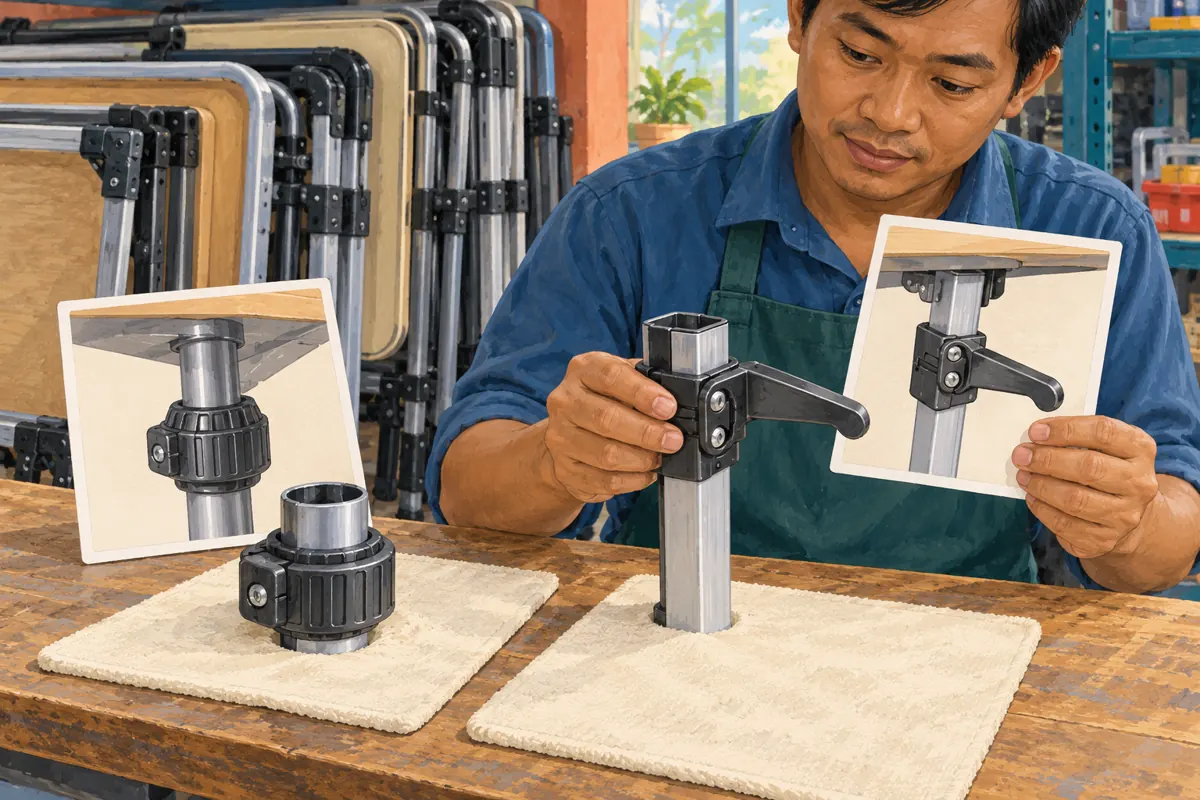
Watch the proposed videos together with the actual product nearby. Compare leg shape, locking mechanism, tabletop attachment and carrying arrangement. Similar-looking tables may use different release steps. A viewer who moves from one model’s opening demonstration to another model’s folding guide could reasonably assume the mechanisms match unless the difference is made explicit.
In another hypothetical example, the shop’s older table uses a round adjustment collar, while current stock uses a lever latch. Separate those guides into clearly named model collections when the operating steps differ. Record the model identifier in the planning sheet and use recognisable product views in titles or thumbnails. Check supplied accessories independently: a bag visible in an old demonstration does not establish that a bag is included with today’s offer. Follow the relevant product instructions when filming operation.
Create the collection and save its intended order
YouTube’s desktop instructions describe creating a playlist from a video through More, Save and Create new playlist. Enter a clear name, choose its visibility and create it. Add the other selected videos through Save. Open the playlist itself and drag videos up or down to arrange them. These steps are documented in YouTube Help’s Create & manage playlists guide.
Pay attention to where you rearrange the entries. YouTube distinguishes reordering the playlist from temporarily changing the order in the watch page’s playlist panel. Reopen the full playlist after editing and verify the sequence again. The same Help guide says reordering is unavailable for playlists containing only Shorts, so do not assume this workflow applies to a Shorts-only collection. For this equipment guide, use the ordinary demonstration videos you have reviewed.
Name the guide for a task and a recognisable model
A title such as “Portable Market Table: Measuring, Setup and Packing” tells a buyer what the collection contains. Add the shop’s genuine model identifier where necessary. Avoid a title that promises every stall solution when the videos cover only one table. Write the customer-facing wording in the language those customers understand; for a Khmer-speaking audience, have a fluent reviewer check the practical meaning of equipment terms.
Use the playlist description to state who the guide serves and what the viewer should check before contacting the shop. YouTube Studio supports editing playlist titles and descriptions. An illustrative description might explain that the videos show one specified table model and invite buyers to confirm their available floor space. Keep changing stock or delivery promises in information the shop can reliably maintain, rather than scattering them across every lesson.
Choose visibility deliberately, then test access
YouTube offers public, unlisted and private playlist settings. Its privacy guidance says public playlists can be watched and shared by anyone, while unlisted playlists can be watched and shared by anyone with the link. An unlisted link is therefore suitable only when onward sharing is acceptable. It should not be treated as a confidential review room.
For this hypothetical supplier, a public guide may suit general product education, while an unlisted collection may suit a limited preview of material already safe to share. After selecting visibility, ask a colleague to open the exact link without the owner’s account. Check each video, not just the collection’s landing page. If something cannot be watched, resolve that access problem before sending the guide to buyers. Do not assume the owner’s successful playback proves the customer experience works.
Test the sequence as a buyer would encounter it
Send the proposed promotional message and its link to a colleague’s phone. Ask them to identify the first question answered, find the assembly demonstration and locate the packing explanation. Avoid coaching them through the test. Their hesitation can reveal a vague title, an unfamiliar thumbnail or an entry that appears in an unexpected position.
Also test entering halfway through. A customer may receive a single demonstration from a friend and never see the opening video. Each lesson should briefly identify the product and the task it covers. Essential operating conditions should remain in the relevant lesson rather than depending entirely on a previous video. A playlist recommends a route through information; it cannot guarantee that every viewer follows that route. Check the guide again after making any changes prompted by the test.
Promote the useful answer and review SMM claims separately
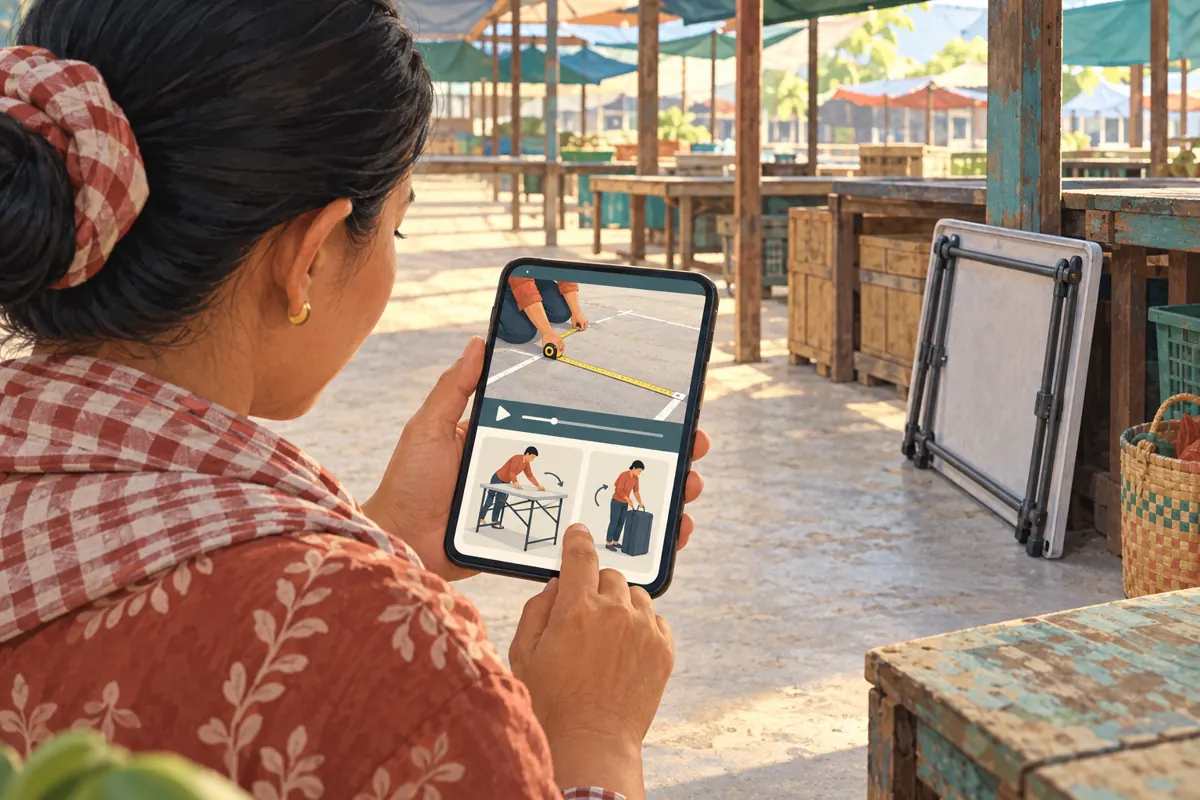
Write the promotional message around the practical question: check your stall space, then see how this model opens and packs away. Share the reviewed guide through the shop’s own relevant channels and answer genuine enquiries. A clear educational destination gives the promotion substance. It does not guarantee views, search placement or sales, and rearranging videos alone does not establish that more suitable customers will discover them.
The supplied catalogue includes “YouTube - Like ~ Max 1M ~ 𝐍𝐎 𝗥𝗘𝗙𝗜𝗟𝗟 ~ 50k/days ~ INSTANT”. Its name presents a likes offering, but the supplied description is empty. The title’s delivery claims are not verified evidence, and it provides no basis for claiming playlist editing, Cambodian viewers or qualified buying interest. YouTube’s fake engagement policy prohibits artificial metric inflation and warns that a hired promoter’s actions can affect the channel. Decline methods that violate that policy. Purchased engagement is not evidence of genuine interest, sales, ad delivery or Cambodian users.
Use customer questions to decide what needs improvement
After sharing, keep a simple record of genuine questions: the product model, the missing explanation and the change that would help. If buyers repeatedly ask whether the packed table fits their storage area, examine whether the packing lesson actually shows the relevant dimensions. Do not immediately conclude that the playlist needs more promotion when the answer itself is incomplete.
Keep business evidence separate from platform counters. A customer confirming a model and requesting collection arrangements is a different event from a video receiving a like. Where a customer voluntarily explains how they found the guide, record that as their reported source rather than proof of a universal buying journey. For a small shop, a useful improvement may be a clearer explanation that staff can confidently reuse, even when there is insufficient evidence to attribute additional sales.
Maintain the sequence when products or videos change
Assign one person to review the playlist whenever a model changes, a demonstration is replaced or an offer is revised. That review should cover the order, model consistency, accessibility and promotional wording. Keep a dated note of the intended sequence so another staff member can recognise an accidental change without relying on memory.
Common mistakes include placing every new upload first, mixing operating instructions for similar models, trusting a temporary playback arrangement and assuming that an attractive opening clip answers the buyer’s first question. Another mistake is keeping an obsolete demonstration solely because it has accumulated engagement. Decide whether it still serves the current guide. If it remains useful for owners of an older model, preserve that context in a separate, accurately described collection instead of allowing it to confuse prospective buyers.
Frequently asked questions
Should the most popular video always appear first?
No. Choose the first video by the guide’s purpose. A popular packing demonstration may be the right entry for existing owners, while a measurement guide may better serve prospective buyers. If those audiences need substantially different routes, create clearly differentiated collections rather than forcing both through one sequence. Popularity alone does not establish instructional usefulness.
What if the shop only has two relevant demonstrations?
Use two if they answer the stated purpose honestly. A short, coherent collection is more useful than a longer one padded with unrelated material. Identify any unanswered question and decide whether it requires another video, clearer wording or a direct conversation. Do not label the collection a complete setup guide when an essential operating step is missing.
Can an unlisted playlist be used for confidential customer material?
Treat an unlisted playlist as shareable by anyone who receives its link. It is unsuitable for material that depends on recipients keeping access restricted. For an equipment guide, remove customer order labels, private contact details and other unnecessary identifying information before sharing. Choose a different authorised review method when confidentiality is required.
Does buying likes help YouTube understand the lesson order?
There is no supported basis for that claim. Playlist order is an editorial setting, and purchased likes do not tell you whether viewers understood the demonstrations. YouTube also prohibits artificial engagement. Spend the preparation effort on accurate instructions, a tested sequence and useful promotion that complies with platform rules.
How often should the shop check the playlist?
Use changes as the main trigger: new stock mechanisms, replacement videos, altered accessories or reported access problems. Also review it before reusing the guide in a fresh promotion. A brief check by the responsible staff member should confirm that the opening lesson, product identity and next steps still match what the shop can currently explain and supply.
Explore the current service catalogue, create an account, or ask a specific question through support tickets.
- YouTube Help: Create & manage playlists
- YouTube Help: Manage playlists in YouTube Studio
- YouTube Help: Change playlist privacy setting
- YouTube Help: Fake engagement policy
Prepared with AI assistance. Illustrations explain the workflow and do not represent customer results.