21/10/2026 23:21
Open for Visits or Ready for Collection? Telegram Business Hours for Cambodian Kettle-Repair Shops

A customer sees a kettle-repair demonstration on Telegram, opens the shop’s profile and notices that the business is open. Does that mean someone can receive a faulty kettle, that a technician is available immediately, or that an existing repair is ready for collection? Those are different promises. For Cambodian repair businesses promoting their work through social channels, a useful profile should help customers decide when to visit without implying that every service is available throughout the day. This workflow connects Telegram Business opening hours, location information and a clear collection process before a promotional post is shared more widely or an SMM-panel service is considered.
1. Define what your opening hours actually promise
Start with the service a visitor can reliably receive during the displayed hours. For a small kettle-repair shop, that might mean speaking to the counter assistant, leaving an appliance for assessment or collecting a repair that staff have already confirmed. It does not automatically mean receiving a diagnosis while waiting. Write this definition internally before changing the profile.
Consider a hypothetical Phnom Penh workshop where the owner repairs appliances in the morning while an assistant handles the counter. The business may accept drop-offs during that period even when the owner cannot discuss a complicated fault. Its public explanation should describe counter availability and tell customers how to request a technician consultation. Showing longer hours simply because someone is inside the building creates an expectation the shop may struggle to meet.
2. Understand where Telegram Business information belongs
Telegram’s official Business introduction explains that businesses can display operating hours and a location on a map. Its technical documentation identifies these as account features and states that Business features are available to Premium subscribers. Check access in the account that actually answers customer enquiries before planning around the feature. A promotional channel and the customer-facing account serve different purposes.
Review the route from your channel post to that account. A reader should recognize the same shop name and understand that this is the place to ask about a visit. If your account does not have the relevant controls, provide a clear written schedule and address in your customer information instead. Do not advertise a profile feature that customers cannot see, or assume a channel automatically inherits an account’s business details.
3. Prepare the weekly schedule before entering it
Create a simple weekly record with each day, the counter’s opening and closing times, any closure interval and the staff member responsible for receiving visitors. Ask the person who works at the counter to verify it. A schedule copied from an old social graphic may describe a previous staffing arrangement rather than the hours customers can currently use.
In Telegram settings, look for Telegram Business and the opening-hours controls; wording and layout can vary by app version. Enter the verified schedule, checking the business time zone carefully. Telegram’s hours data includes a time zone and weekly intervals. For a Cambodian shop, verify that the displayed schedule represents Cambodian local time. Review the saved result instead of assuming the phone’s own settings have produced the intended customer-facing hours.
4. Separate opening, readiness and appointment confirmation
Treat three statements independently: the counter is open; the particular kettle is ready; a collection arrangement has been agreed. Telegram’s documented open-status calculation uses the current time and configured weekly schedule. It does not inspect a workshop’s repair records. An open indication therefore cannot establish that a customer’s appliance has passed the shop’s checks or is waiting at the counter.
A hypothetical collection message could say: “Your kettle is ready for collection. Please tell us which day you plan to visit so we can confirm the handover arrangement.” Add the applicable counter hours and identify the repair using the shop’s usual reference. If an exact appointment is necessary, confirm it explicitly in the conversation. Avoid teaching customers to interpret a profile status, a reaction or a general promotional post as approval to collect.

5. Check the customer entrance, not just the map
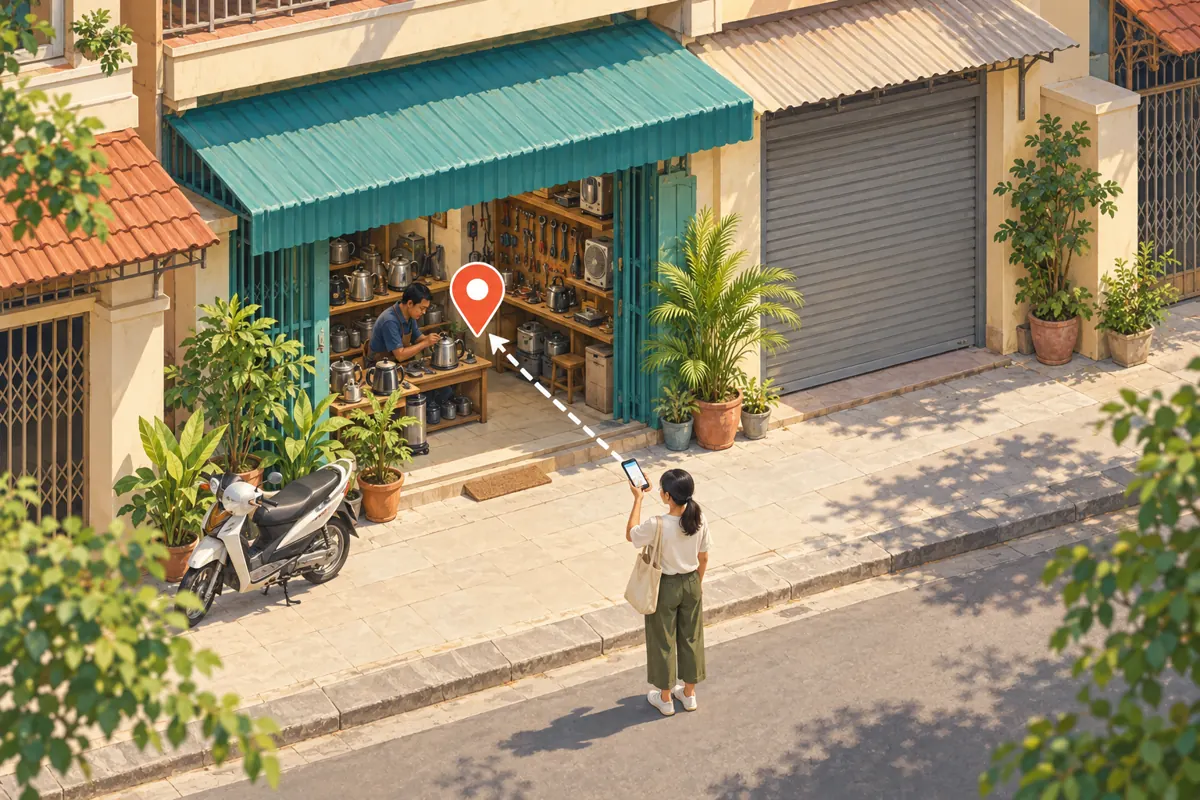
Choose the location that customers should physically approach. A workshop might use a rear room for repairs while accepting appliances through a front counter. Another business might share a building with a supplier. A map position near the building is less useful when the accompanying explanation sends visitors to an entrance where nobody can receive them.
Telegram’s location documentation supports a written address and optional geographic coordinates. Check both against the actual customer entrance. Add a concise landmark or entrance description in your customer information when needed, using details staff can verify. A current exterior photograph can help customers recognize the doorway, provided it excludes private customer information. For a home-based business that accepts visits only by arrangement, decide what address information is appropriate to make public before adding it.
6. Plan for temporary closures and irregular days
A recurring weekly schedule cannot explain every exceptional day by itself. Before a holiday, a supplier trip or an unexpectedly short working day, compare the public schedule with the actual staffing plan. Decide who will update the relevant information and when normal hours will be restored. Do not assume the app will infer an exception from a message elsewhere.
For a hypothetical temporary closure, publish a dated explanation stating the affected day, whether drop-offs and collections are both unavailable, and when staff expect to resume receiving visitors. Contact customers with existing collection arrangements separately. If you alter recurring hours for the exception, set an internal reminder to review them afterward. Otherwise, a correction made for one closure can quietly become the next source of misleading information.
7. Make the promotional post support the visit decision
A repair demonstration should tell viewers what the shop offers and what to do next. It need not squeeze the full timetable into every frame. Use the accompanying post to explain whether customers should message before bringing an appliance, what information helps staff assess the enquiry, and where to find current visiting details. Keep any promise about assessment or completion consistent with actual workshop practice.
For example, a hypothetical post might invite readers to send the kettle model and a brief fault description before arranging a drop-off. It should avoid suggesting that the demonstrated repair is suitable for every kettle or always available immediately. Prepare customer-facing wording in the language your intended readers understand, and have Khmer wording checked by a fluent colleague when used. Hours, closure dates and appointment conditions deserve particular attention during translation.
8. Decide whether an SMM service addresses the real problem
If customers cannot find the entrance or misunderstand collection arrangements, additional distribution will not resolve the underlying problem. Complete the information checks first. The supplied catalogue includes “Telegram Post Share ~ Max 100k ~ 100k/day ~ Instant ~ 𝐍𝐎 𝗥𝗘𝗙𝗜𝗟𝗟”. Its name identifies a post-share offering, but the supplied description is empty. Treat the remaining wording as catalogue claims, not independently verified delivery conditions.
Before considering that listing, obtain clear information about accepted targets, delivery meaning, restrictions and support terms. Check applicable platform rules and decline services that rely on misleading or prohibited engagement. A post-share service does not configure business hours, verify an entrance or confirm a collection. Purchased engagement is not evidence of genuine interest, sales, ad delivery or Cambodian users. Keep any service record separate from the shop’s customer enquiry and repair records.
9. Test the journey as a first-time customer
Ask a colleague to begin with the exact promotional post and follow its route to the customer-facing account. Give them a practical task: determine when they could bring in a kettle and which entrance they should use. Let them explain their interpretation before correcting it. If they conclude that opening hours guarantee an immediate repair, the wording still needs work.
Check the visible schedule, the location, the contact destination and any conflicting hours in recent promotional material. Then ask a separate question: can an existing customer tell whether their own repair is ready? The answer should depend on a specific confirmation from staff. Use an ordinary viewing account with permission for the test, and record misunderstandings rather than collecting unnecessary screenshots of private conversations.
10. Maintain the information and learn from actual enquiries
Assign one person to maintain the schedule and one substitute for absences. Review the details whenever staffing, the entrance or the collection process changes. Keep a short internal note stating what changed, who checked it and which customer-facing messages need revision. This makes the next promotion easier to prepare and reduces contradictory answers from different staff.
Common mistakes include publishing repair-bench hours as walk-in hours, leaving a temporary closure in place, relying on a map without checking the doorway and treating a share count as evidence of successful visits. Review genuine enquiries for recurring confusion about these points. A customer’s report that the entrance was difficult to find is actionable feedback. A change in a platform counter alone cannot establish that your new schedule helped customers arrive at the right time.

Frequently asked questions
Does Telegram showing the shop as open mean a kettle is ready to collect?
No. The documented open indication is based on the configured hours and time zone. Repair readiness belongs in the shop’s own workflow. Staff should confirm the specific appliance is ready and explain any collection conditions directly to its owner. A customer who has only seen the opening hours still needs that confirmation before making a collection trip.
What if the counter is open but the repair technician is unavailable?
Publish the hours during which staff can reliably provide the stated counter service, then explain the technician’s availability separately. For example, customers may be able to leave an appliance for later assessment while consultations require an agreed time. If no one can receive visitors, the public information should reflect that. Avoid allowing one general schedule to imply every member of staff is available.
Can a promotional channel replace the business profile?
A channel can carry useful visiting information, but customers still need a clear route to the account that handles enquiries. Decide where the current schedule is maintained and make other messages consistent with it. Do not assume business-account hours appear automatically on a channel. Test the exact route your readers will use, including the destination of any contact link.
What should an appointment-only home workshop display?
Explain that visits require prior agreement and avoid presenting general working time as unrestricted walk-in availability. Decide whether publishing the home address is appropriate for the business. Where necessary, give confirmed customers the visit details privately. The essential information is how to request an appointment, when staff normally respond and what constitutes an accepted arrangement.
Will buying Telegram shares bring Cambodian repair customers?
A share-service name cannot establish audience location, genuine intent or future visits. The supplied listing has no descriptive evidence supporting those conclusions. First make the post useful and the visit information accurate. If you evaluate any service afterward, assess its documented scope and applicable rules, and report its delivery separately from genuine enquiries, accepted repair jobs and completed collections.
Explore the current service catalogue, create an account, or ask a specific question through support tickets.
- Telegram: Introducing Telegram Business
- Telegram Business: Account Features and Opening Hours
- Telegram: Business Opening Hours and Open Status
- Telegram: Business Location Fields
Prepared with AI assistance. Illustrations explain the workflow and do not represent customer results.